I built the consent architecture first and let everything else hang off it. That ordering is the whole platform, so it is worth being concrete about what it means.
Caregiver access is scoped, and it expires. A grant names exactly what a caregiver may do and for how long, and every protected action checks it. "Medications only, ninety days" is a sentence the system can actually express and then enforce.
Ananya’s recordsShared with you
Access ends in 7 daysAccess ends in 30 daysAccess ends in 90 days
Medications
- Metformin 500 mg twice daily
- Amlodipine 5 mg once daily
Not shared with you
Lab reports
- HbA1c 6.9% 12 Sep
- Lipid panel 28 Aug
Not shared with you
Documents
- Discharge summary Aug 2026
- Prescription Sep 2026
Not shared with you
Appointments
- Cardiology follow-up 14 Oct
- Diabetes review 2 Nov
Not shared with you
Access ended
Ananya revoked this grant. The next request Ravi’s app makes is refused.
Every request re-checks this grant
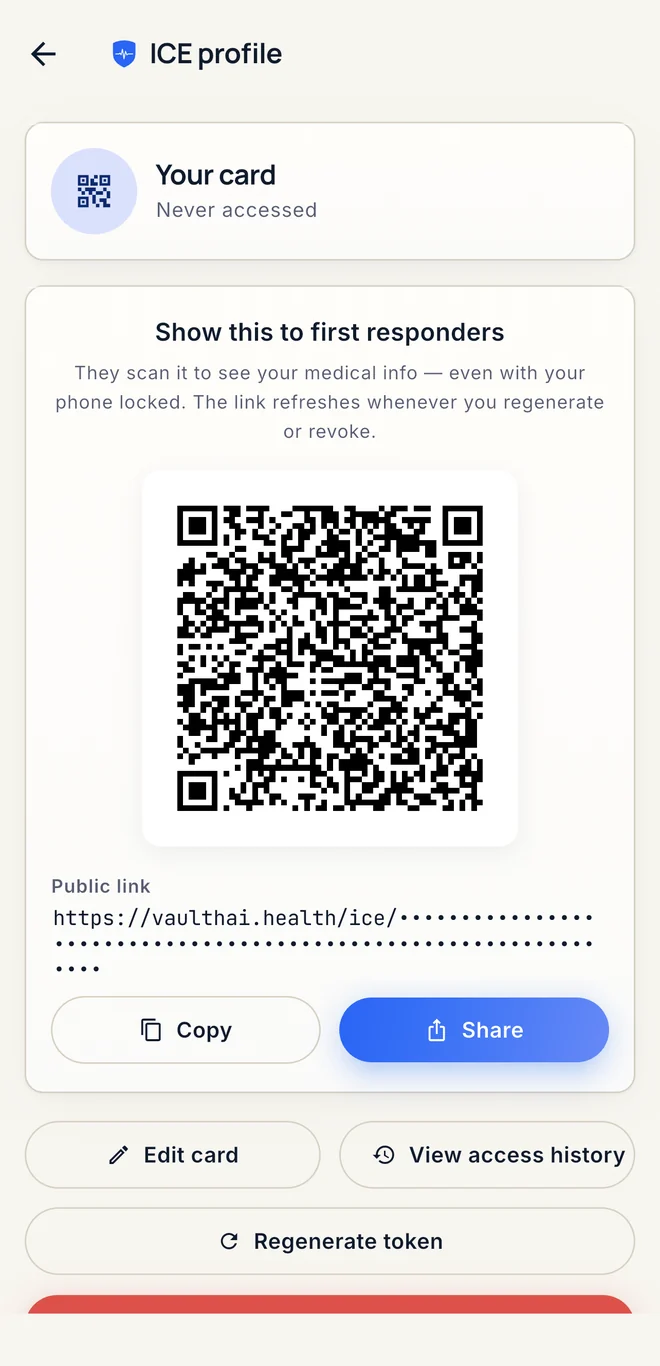
Every external view of a record is time-bound, revocable and logged. A doctor gets a share link with an expiry, an access count and a revoke button. A first responder scans an emergency card that the owner can revoke instantly, and every scan is logged.
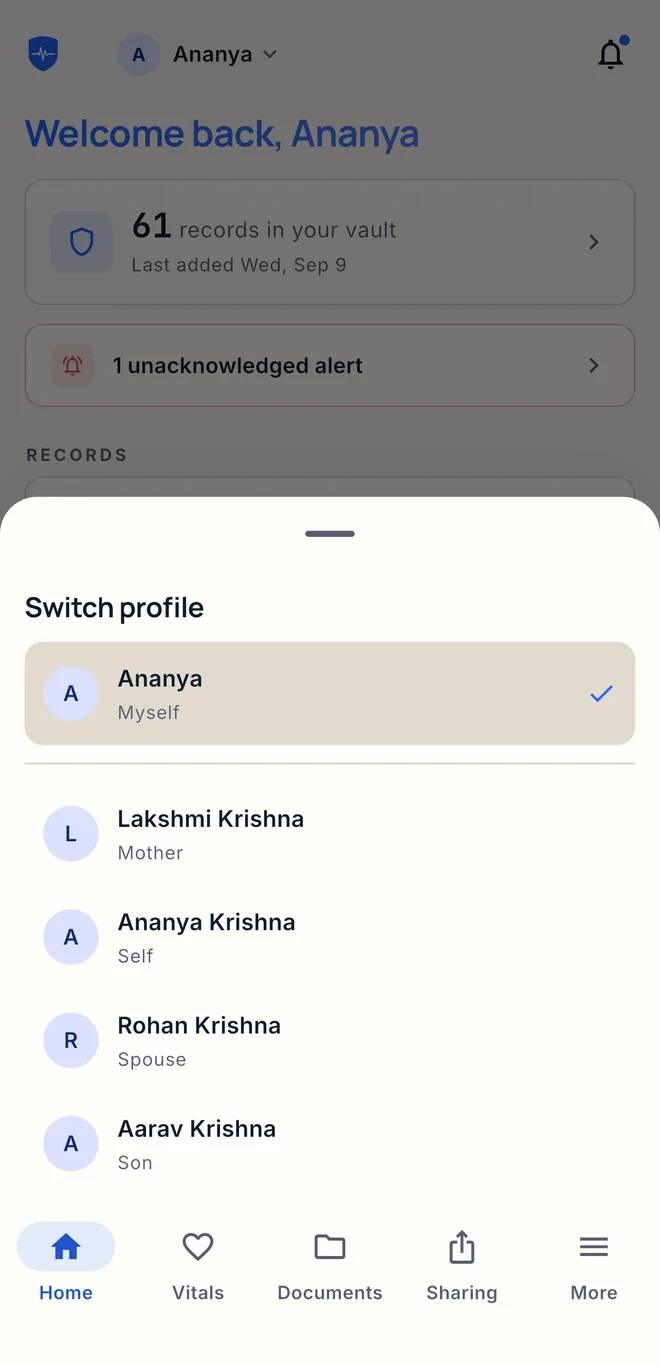
Family circles share shapes, not values. Inside a small, invitation-only circle, members see how things are trending rather than the raw numbers, and each person decides, one kind of data at a time, what the circle sees. The circle tells you your father's blood pressure is trending badly. It does not hand you his readings.
Dependant migration closes the loop on ownership: a child who grows up can claim their own account, and their entire health record transfers out of the parent's custody with them. Custody that cannot be handed over is not custody.
The product's own AI asks too. Automatic document analysis waits for consent: the person is asked first, with the processor named. Declining withholds only the analysis: documents are still stored, viewed and shared exactly as before. The gate fails closed, because a gate that fails open sends health records to a third party on the strength of an outage, and consent is tied to its wording, so changing the named processor asks everyone again. It is the consent thesis applied to the product's own pipeline.
Traded away: every convenience that assumes the app may read what it holds. No cross-user analytics, no aggregate insight products, no silent claiming of registered users as dependants, and a permanent commitment never to sell data — which is the one promise that ends the company if it is ever broken.
Rejected: the aggregator posture, where access is granted in exchange for custody. It is the faster product and the better-funded business model, and adopting it would have made every other sentence on this page dishonest.